From emerging threat to positive action
Psychological injury is now a material workplace risk in Australia and an opportunity for organisations to lead on safety and culture.
Claims for mental health conditions are increasing faster than any other workplace injury category, yet many organisations still rely on lagging indicators such as compensation claims and absenteeism. Early signals exist and with the right tools they can be measured and addressed to protect people and boost performance.
Understanding the rise in psychological injury
National workers’ compensation data show that mental health conditions have moved from the margins to a significant share of serious claims. In 2021 to 2022 mental health conditions accounted for around one in 11 serious workers’ compensation claims and had increased by 43 percent over the previous decade [1]. By 2024 the share was about 10.5 percent of all serious claims, representing a 97 percent increase over ten years, and by 2025 experts note it has reached roughly 12 percent [2]. Psychological claims are also more costly. The median time lost for serious mental health claims in New South Wales is 30.7 weeks versus 6.2 weeks for physical injuries, and the median compensation paid is around four times higher [1]. These trends emphasise that psychological injury is a material Work Health and Safety risk, not a passing wellbeing trend.
A balanced perspective on risk
While these statistics highlight a growing challenge, they also reveal a clear path for improvement. Psychosocial hazards, which are aspects of work that can cause psychological or physical harm, are often the result of how work is designed and managed. Comcare notes that preventing psychological harm is an essential part of creating a healthy and safe workplace, and the Model Work Health and Safety laws now require employers to manage psychosocial hazards with the same diligence as physical hazards [3]. This regulatory clarity means organisations have both an obligation and an opportunity to act.
Why early signals matter
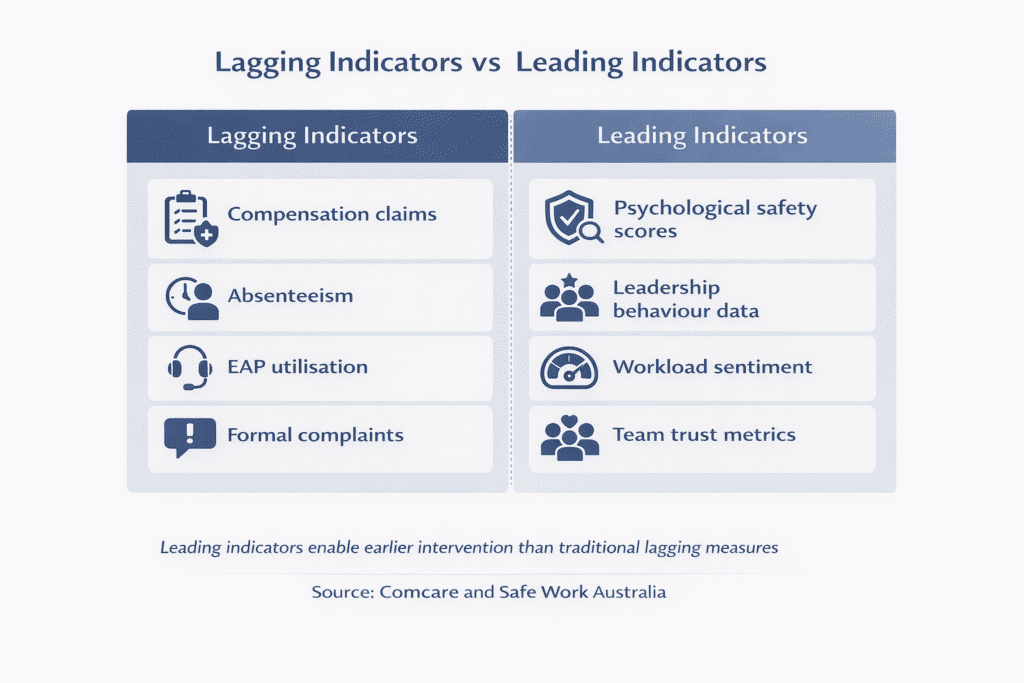
Many organisations still rely on lagging indicators such as workers’ compensation claims, incident reports, employee assistance program utilisation and absenteeism. These measures are important but retrospective. They describe harm that has already occurred and are often influenced by underreporting and multiple external factors. By contrast, leading indicators such as employee sentiment data, psychological safety surveys, leadership behaviour metrics and the timeliness of risk assessments provide early warnings that enable timely intervention [3]. Tracking these indicators can highlight issues like high workload, low control and poor support before they translate into injuries or claims. Early measurement therefore transforms psychological injury from a looming threat into a manageable risk.
Data Drives Insight: turning insight into action
At Data Drives Insight we believe that data should tell the human story and guide leaders toward evidence based decisions. Our diagnostic tools are designed to make invisible stressors visible and to connect culture to business outcomes. By illuminating the drivers of turnover, disengagement and conflict, we help organisations build healthier and more productive workplaces.
DDI’s Team Excel program shines a light on team performance and psychological safety by diagnosing and improving safety and inclusivity. Through anonymous and confidential diagnostics and targeted micro learning, teams are empowered to identify their own challenges and enact meaningful improvements. Our Leader Excel program helps leaders develop self awareness and close capability gaps through comprehensive 360 degree feedback. It equips leaders with data driven insights to build psychologically safer and more inclusive teams and to move away from burnout culture. Together these tools enable organisations to proactively address psychosocial risks and meet compliance requirements by making invisible stressors visible.
How early intervention benefits organisations
Data driven early intervention delivers measurable benefits. When organisations act on early signals they can adjust workloads, redesign roles or provide targeted support before issues escalate into injuries. This reduces absenteeism, improves engagement and fosters trust. Evidence shows that early return to work programs and timely access to psychological support significantly improve recovery outcomes and help employees reintegrate more quickly [2].
Focusing on early signals also aligns with broader organisational sustainability goals. Research consistently shows that the cost of replacing an employee can range from 30 to 150 percent of their annual salary. Investing in psychological safety and inclusive leadership therefore produces tangible financial returns. Organisations that combine leading and lagging indicators create a cycle of continuous improvement that strengthens compliance, builds resilience and enhances employee wellbeing.
Our stance: optimism grounded in evidence
At Data Drives Insight we see the rise in psychological injury claims not as a reason for alarm, but as a call to action. The data confirm that mental health is a critical safety issue, but they also show that measurement and early intervention work. By partnering with organisations to illuminate invisible stressors and provide actionable insights, we help leaders and teams create environments where people feel safe, respected and able to perform at their best. With the right diagnostics and a commitment to early action, psychological injury can be prevented, managed and minimised.
References
1. Safe Work Australia. Key Work Health and Safety Statistics Australia. https://www.safeworkaustralia.gov.au/resources-and-publications/statistics/key-work-health-and-safety-statistics-australia
2. Safe Work Australia. Workers’ Compensation Data Portal. https://data.safeworkaustralia.gov.au/workers-compensation
3. Comcare. Psychosocial hazards at work. https://www.comcare.gov.au/safe-healthy-work/prevent-harm/psychosocial-hazards